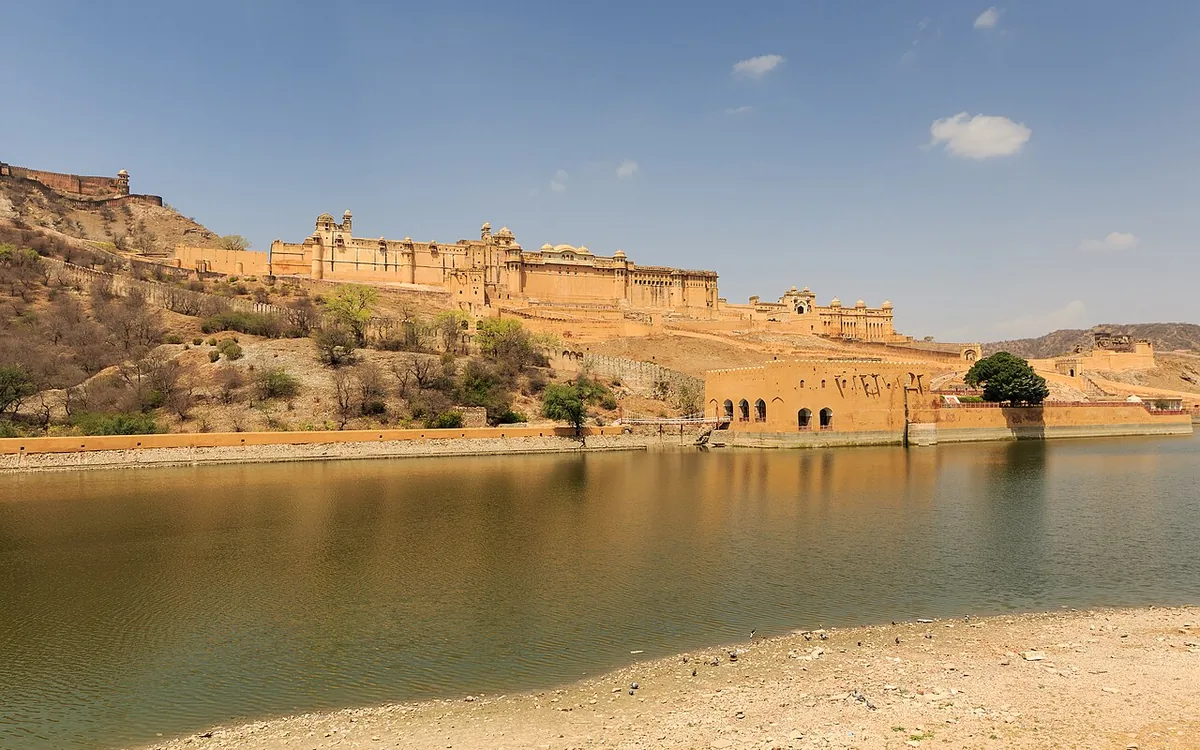
Amber Fort, also called Amer Fort or Amer Palace, rises above Maota Lake in Amer, about 11 km north of the walled city. Raja Man Singh I began it in the late 16th century, and later rulers added to it until the capital moved to Jaipur in 1727. Built in pale yellow and pink sandstone and white marble, it is laid out around four main courtyards: Jaleb Chowk, where returning armies once paraded; the Diwan-i-Aam, the hall of public audience; the royal apartments around a Mughal style garden, with the Jai Mandir and its mirrored Sheesh Mahal facing the Sukh Niwas; and the older palace of Man Singh I with the zenana quarters. Shila Devi Temple opens off Jaleb Chowk, and Jaigarh Fort stands on the ridge above. Amber is one of the six Hill Forts of Rajasthan listed by UNESCO in 2013. Arrive when it opens at 8 AM to beat the tour groups, and either walk up the ramp from the lake or take a jeep from the parking area.
- Hours: 8:00 AM to 5:30 PM daily for day visits. A separate evening visit and a light and sound show run after dark; from October to February Rajasthan Tourism lists the show at 6:30 PM in English and 7:30 PM in Hindi. Entry (2026 rates): ₹200 Indian, ₹100 Indian student, ₹1,000 foreign, ₹500 foreign student. Included in the Jaipur composite ticket (₹550 Indian, ₹1,700 foreign; students ₹180 and ₹800), valid for 2 days at 9 state run sites including Amber Fort, Hawa Mahal, Jantar Mantar, Nahargarh Fort, Albert Hall, Isarlat, Vidyadhar Garden and Sisodia Rani Garden.
Share a quick rating, tip, or photo so the next traveler knows what to expect.